Does Whitening Toothpaste Work on Sensitive Teeth?
Tooth sensitivity (dentin hypersensitivity) affects approximately 12% to 15% of the global population and is characterized by intense pain in response to cold, hot, sweet, or acidic stimuli. A well-formulated whitening toothpaste can effectively alleviate tooth sensitivity, provided it contains potassium nitrate or stannous fluoride to seal the dentinal tubules. Without these protective ingredients, ordinary whitening toothpastes may do more harm than good.
The Science of Stain Removal: Mechanisms of Action for Whitening Toothpastes
The primary mechanism of a whitening toothpaste involves mild abrasives (e.g., hydrated silica, calcium carbonate) and low-concentration peroxides (typically ≤ 1.5% hydrogen peroxide). These agents break down chromogens—organic stain molecules from coffee, tea, or tobacco—without penetrating the enamel-dentin junction. For non-sensitive individuals, this is safe and effective. However, for sensitive teeth, the exposed dentinal tubules allow fluid movement that triggers nerve depolarization. Therefore, any whitening toothpaste must balance the Relative Dentine Abrasivity (RDA) value; an RDA above 200 is considered highly abrasive and contraindicated for sensitive patients. Clinical studies show that a whitening toothpaste with an RDA of 70–100 achieves significant stain removal (ΔE > 3.0) while maintaining safety. The key takeaway: not all whitening toothpaste products are equal—patients must inspect the RDA label and active desensitizer list before purchase.
Are Purple Whitening Toothpastes Safe and Effective?
Purple whitening toothpaste is a newer category of product that utilizes color-correcting pigments (typically purple or blue dyes) to temporarily neutralize yellow undertones on the enamel surface. Unlike peroxide-based products, purple whitening toothpaste does not chemically bleach the dentin; in a four-week crossover study, subjects with moderate sensitivity reported significantly less discomfort (p < 0.05) when using purple whitening toothpaste compared to traditional peroxide-based whitening toothpastes. However, this optical effect is fleeting—lasting only two to four hours after brushing—and cannot remove intrinsic tooth stains. For sensitive patients seeking immediate, low-irritation aesthetic improvements, purple whitening toothpaste offers a practical compromise. Nevertheless, to ensure long-term protection, it should be used in rotation with desensitizing toothpaste.
Can natural whitening toothpaste really protect tooth enamel?
Many consumers prefer natural whitening toothpastes containing baking soda, activated charcoal, or papain (a proteolytic enzyme). Baking soda has an RDA value of only 35–60; consequently, natural whitening toothpastes containing sodium bicarbonate are generally less abrasive than silica-based alternatives. However, natural whitening toothpastes rarely contain potassium nitrate or stannous fluoride, meaning they lack effective desensitizing protection. Therefore, while natural whitening toothpastes may be safe for patients with mild to moderate sensitivity, they should still be used under professional guidance, particularly for patients with exposed cervical margins.
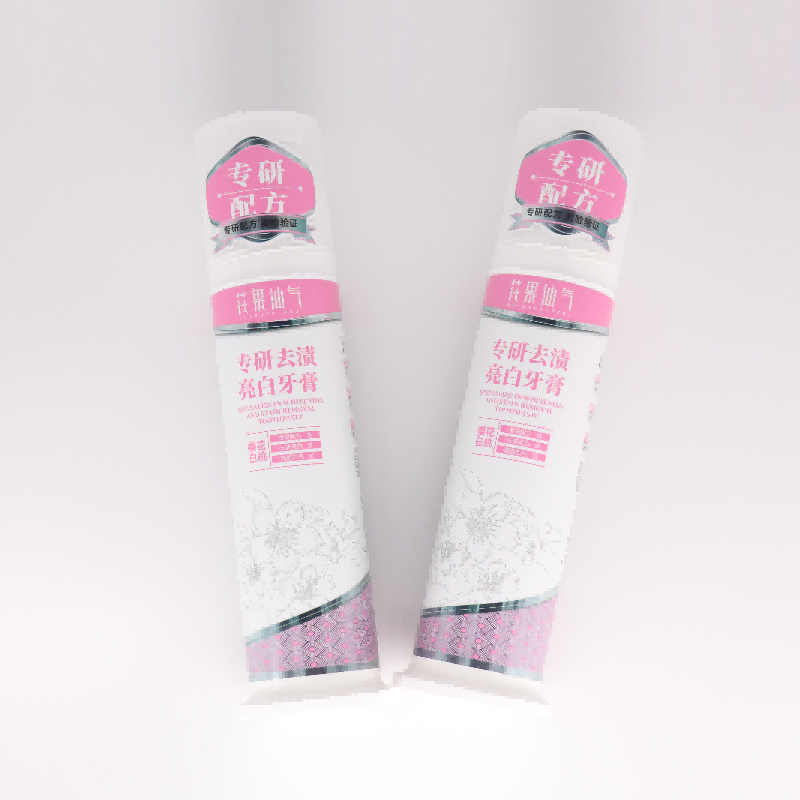
sensitive toothpaste
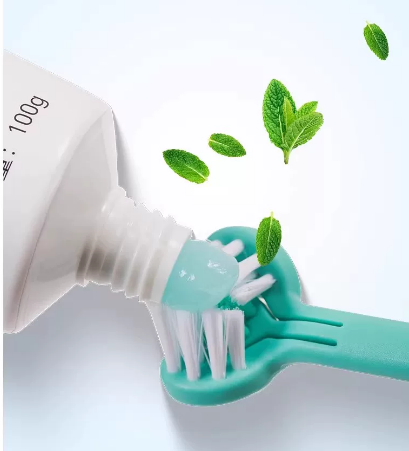
natural whitening toothpaste
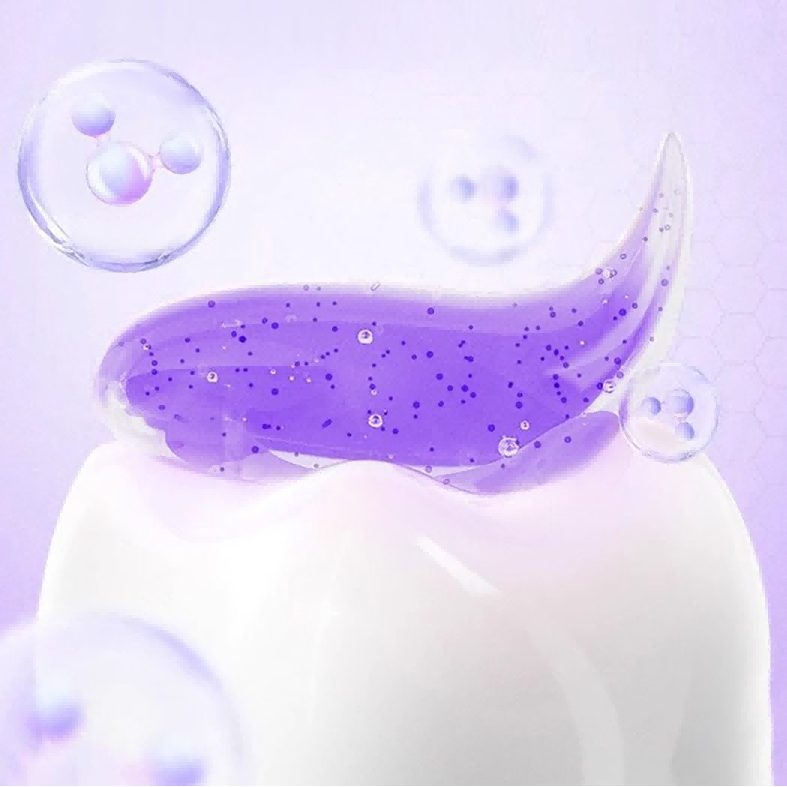
purple whitening toothpaste
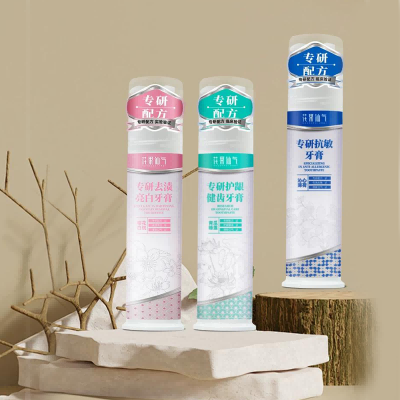
sensitive toothpaste
The Desensitizing Solution – Why Sensitive Toothpaste Is the Gold Standard
For individuals with pronounced dentine hypersensitivity, a sensitive toothpaste remains the evidence-based primary recommendation. Formulations with 5% potassium nitrate depolarize nerve endings by increasing extracellular potassium concentration, thereby reducing pain signaling. A sensitive toothpaste with stannous fluoride (0.454%) further occludes tubules through the precipitation of zinc-phosphate complexes, offering immediate and cumulative protection. Clinical trials demonstrate that twice-daily use of a sensitive toothpaste reduces sensitivity scores by 67% over 8 weeks. For severe sensitivity, a sensitive toothpaste with amorphous calcium phosphate (ACP) provides remineralization benefits, further reinforcing enamel structure.
How to Choose the Right Toothpaste?
Based on current evidence and ADA-SE standards, here is a clinical protocol for sensitive patients seeking whitening:
Assess RDA: Select a toothpaste with RDA ≤ 100. Avoid any whitening toothpaste with RDA > 150.
Check active desensitizers: Ensure your whitening toothpaste contains ≥ 5% potassium nitrate or 0.454% stannous fluoride.
Consider optical alternatives: For minimal sensitivity, a purple whitening toothpaste offers zero chemical irritation and immediate visual improvement.
Avoid charcoal-based products: Most natural whitening toothpaste with activated charcoal has unpredictable abrasivity—steer clear if you have gum recession.
Alternate routines: Use a sensitive toothpaste at night (longer contact time) and a whitening toothpaste in the morning (supervised by a timer, 2 minutes maximum).
A whitening toothpaste can work on sensitive teeth—but only under strict formulation criteria. A purple whitening toothpaste offers a zero-abrasion optical alternative, while a natural whitening toothpaste with low RDA (baking soda-based) provides moderate stain removal with reduced irritancy. However, for patients with moderate-to-severe dentine exposure, the safest approach combines a sensitive toothpaste for nocturnal desensitization with a low-abrasion whitening toothpaste for daytime aesthetic benefit. Never use any whitening toothpaste with RDA > 150 or peroxide > 1.5% on sensitive teeth without prior professional evaluation. When selected wisely, your toothpaste can deliver both brightness and comfort—proving that aesthetics and oral health are not mutually exclusive. Always consult your dentist before starting any new whitening toothpaste regimen, especially if you have a history of cervical abrasion or non-carious lesions.
As a specialized manufacturer and developer of oral care products, Fujian Azalli Daily Chemicals Co., Ltd. leverages its own R&D laboratories and established production lines to provide comprehensive OEM/ODM customization services—covering toothpaste, mouthwash, tooth powder, and more—to brand partners. With end-to-end capabilities spanning everything from formula development and packaging design to mass production, Azalli remains rooted in the fundamentals of oral care while moving forward alongside its partners.