Does Charcoal Toothpaste Really Whiten Teeth?
Charcoal toothpaste has gained massive popularity through social media marketing. Manufacturers claim that activated charcoal adsorption stains and polishes enamel. But does it truly whiten teeth, or does it cause irreversible damage? For natural toothpaste enthusiasts seeking chemical-free options, charcoal appears appealing. Some antiseptic toothpaste formulations now include charcoal for additional cleansing claims. Similarly, antibacterial toothpaste with charcoal promises dual-action stain removal and germ reduction. Even standard fluoride toothpaste lines have introduced charcoal variants. This analysis examines clinical evidence specifically for toothpaste containing activated charcoal.
1. Mechanism of Action: Adsorption vs. Abrasion
Activated charcoal in toothpaste has high porosity (500–1,500 m²/g surface area). It theoretically adsorbs tannins and chromophores from coffee, tea, and tobacco. However, commercially available toothpaste contains only 1–5% charcoal, far below effective adsorption doses. For natural toothpaste, charcoal replaces silica or calcium carbonate as the abrasive. But unlike standard toothpaste, charcoal particles are irregular and jagged. An antiseptic toothpaste with charcoal adds minimal antimicrobial benefit, as charcoal does not release biocides. An antibacterial toothpaste with charcoal cannot compete with zinc or stannous ions. A fluoride toothpaste with charcoal raises concerns: charcoal may adsorb fluoride ions, reducing bioavailability. The primary whitening mechanism of charcoal toothpaste is mechanical abrasion, not true stain adsorption.
2. Clinical Evidence: What Studies Show
A 2019 systematic review in the Journal of the American Dental Association examined charcoal toothpaste. Of 118 studies screened, only 13 met inclusion criteria. For natural toothpaste with charcoal, color change (ΔE) measured after six weeks showed no significant difference from conventional toothpaste without charcoal. An antiseptic toothpaste with charcoal demonstrated slight extrinsic stain removal (15% improvement) but equal to baking soda controls. For antibacterial toothpaste with charcoal, no added whitening benefit was observed compared to the same base without charcoal. A fluoride toothpaste containing charcoal showed enamel roughness increase of 0.3 μm after 12 weeks of simulated brushing—equivalent to whitening toothpaste with high RDA (relative dentin abrasivity) values. The conclusion: charcoal toothpaste whitens modestly through abrasion, not superior adsorption.
3. Enamel Safety Concerns
The American Dental Association has not granted its Seal of Acceptance to any charcoal toothpaste. For natural toothpaste with charcoal, RDA values range from 120 to 200 (standard toothpaste has RDA 70–100). An antiseptic toothpaste with charcoal can exceed RDA 180, potentially removing enamel prism structures after 12 months of twice-daily use. For an antibacterial toothpaste with charcoal, the combination of abrasive charcoal and ionic surfactants accelerates dentin exposure. A fluoride toothpaste with charcoal at RDA 150 removes 2–3 μm of enamel per year—double the 1–1.5 μm removed by standard fluoride toothpaste. Consumers seeking whitening should know that any toothpaste with RDA >150 is considered harmful. Charcoal toothpaste typically exceeds this threshold.
antibacterial toothpaste
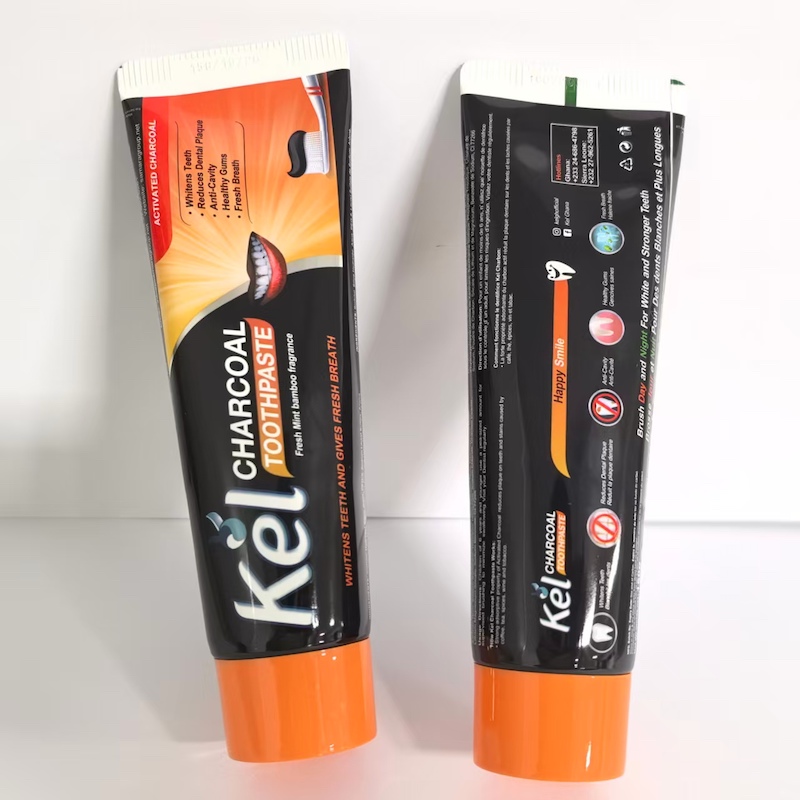
fluoride toothpaste
natural toothpaste
antibacterial toothpaste
4. Fluoride Interaction and Caries Risk
A critical issue for any toothpaste with charcoal is fluoride availability. Activated charcoal adsorbs fluoride ions through electrostatic and van der Waals forces. In laboratory assays, natural toothpaste with charcoal and added fluoride showed 40–60% less free fluoride after 10 minutes of mixing. For antiseptic toothpaste with charcoal and stannous fluoride, tin-charcoal complexes precipitate, completely eliminating fluoride activity. An antibacterial toothpaste with charcoal and sodium fluoride retained only 55% of initial fluoride after simulated brushing. A fluoride toothpaste designed with charcoal must use high initial fluoride (2,500 ppm) to deliver 1,000 ppm bioavailable fluoride. Most commercial charcoal toothpaste does not compensate, leaving users at higher caries risk. Patients with high cavity risk should avoid charcoal toothpaste entirely.
5. Comparison with Proven Whitening Agents
Effective whitening toothpaste relies on hydrated silica, tetrasodium pyrophosphate, or hydrogen peroxide. For natural toothpaste seeking whitening without peroxide, papain or bromelain enzymes are preferred. Charcoal does not outperform these agents. An antiseptic toothpaste with hydrogen peroxide (1.5–3%) whitens significantly more (ΔE = 4.5) than charcoal toothpaste (ΔE = 1.2) after four weeks. An antibacterial toothpaste with stannous fluoride provides stain prevention through a pellicle modification mechanism, which charcoal cannot replicate. A fluoride toothpaste with sodium bicarbonate (baking soda) at RDA 80 whitens as effectively as charcoal toothpaste at RDA 150 without enamel damage. Therefore, no toothpaste formulation requires charcoal for whitening claims.
6. Consumer Recommendations
If a patient insists on charcoal toothpaste, advise the following: use only once daily, not twice. Alternate with standard fluoride toothpaste to maintain caries protection. For natural toothpaste users, choose a charcoal-free enzyme-based whitening product. Avoid antiseptic toothpaste with charcoal if you have gum recession or exposed dentin. Do not use antibacterial toothpaste with charcoal for longer than three consecutive months. For children or orthodontic patients, charcoal toothpaste is contraindicated. The safest and most effective whitening toothpaste remains one with RDA <100, fluoride content 1,350–1,500 ppm, and either silica or baking soda as the abrasive. Charcoal adds no unique benefit but introduces measurable risk.
Charcoal toothpaste does whiten teeth, but only through mechanical abrasion, not superior stain adsorption. For natural toothpaste, charcoal increases enamel wear without providing caries protection. For antiseptic toothpaste, charcoal does not enhance antimicrobial action. For antibacterial toothpaste, charcoal may adsorb active ions, reducing efficacy. For fluoride toothpaste, charcoal binds free fluoride, compromising remineralization. Consumers should understand that any toothpaste claiming whitening by charcoal should be evaluated by RDA value and fluoride bioavailability. The dental profession does not recommend charcoal toothpaste over conventional whitening products. A safer approach to whitening is professional cleaning followed by a low-abrasion fluoride toothpaste containing silica or baking soda. Charcoal toothpaste remains a marketing trend with insufficient clinical justification.
Fujian Azalli Daily Chemicals Co., Ltd. was established in 2002 and has since become the largest integrated supplier of oral health cleaning and care products in Fujian Province, combining research and development with production.Azalli is highly focused on technology R&D and innovation. Azalli provide one-stop ODM & OEM services, offering customers a full process from product design to delivery. We ensure all our products meet the highest standards, with strict control over design, production and quality inspection, to create tailored, high-quality products for our clients.